



Symmetry plays a crucial role in the world of molecular modeling and design. From understanding protein complexes to designing nanomaterials, identifying symmetry axes in biological assemblies opens the door to several critical advancements. If you’ve ever wrestled with large molecular structures and wondered whether leveraging symmetry could optimize your workflow, this post will shed light on the topic.
Why Should Molecular Modelers Care About Symmetry?
Detecting symmetry in protein complexes or biological assemblies helps address several common pain points for molecular modelers:
- Detect functional patterns: Functional interfaces often repeat across symmetric units. Identifying these repetitions can unveil valuable insights into a structure’s mechanisms or dynamics.
- Streamline simulations: By isolating and working with the smallest unique asymmetric unit, you can reduce computational expenses for simulations without sacrificing meaningful insights.
- Enhance validation: Symmetry detection helps confirm expected structural symmetries as a step in validating experimental data or results.
- Aid design workflows: Symmetry-aware design of nanomaterials or mutant proteins becomes faster, more targeted, and more accurate.
How Does Symmetry Detection Work in SAMSON?
The Symmetry Detection Extension in SAMSON is built to identify and visualize symmetry axes across protein assemblies and other complexes effortlessly. Whether you’re dealing with viral capsids, multimeric proteins, or any similar structure, the extension highlights cyclic, dihedral, or cubic symmetry types, providing a precise layout of their arrangement.
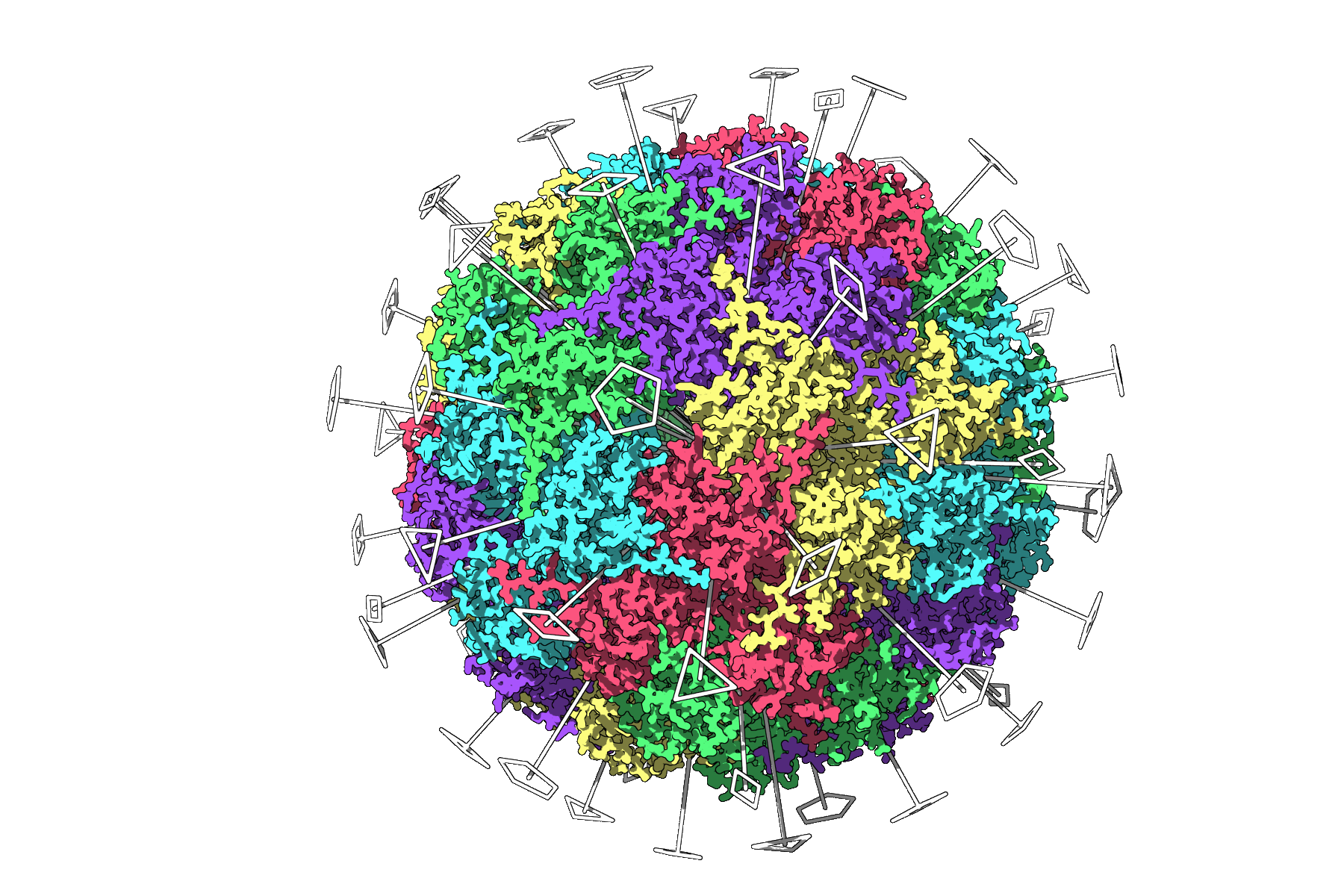
For example, the tool can identify icosahedral capsid symmetry, which consists of 2-, 3-, and 5-fold axes in viral structures like PDB 3NQ4. The results not only help you explore these axes but also allow you to use them for targeted simulations by focusing on just one asymmetric unit. The visualization below demonstrates detected symmetry axes for 3NQ4:
Working with Multiple Symmetries
For large assemblies, the algorithm might detect several plausible symmetry groups. While this can seem overwhelming at first, SAMSON provides tools to help you choose the most appropriate group for your study:
- Prioritize groups with higher symmetry orders and lower root-mean-square deviation (RMSD) values.
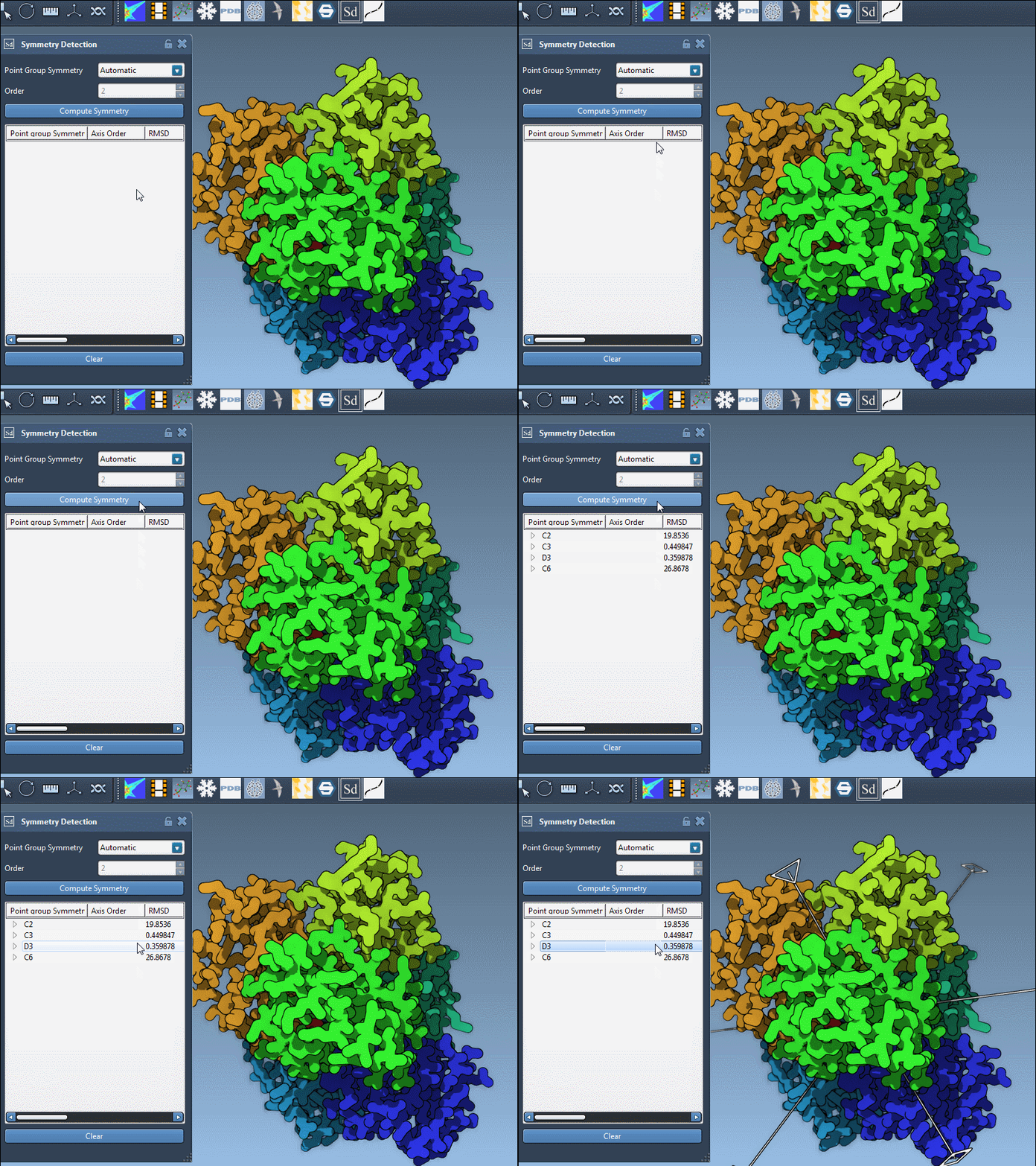
- Single-click on a group to preview its primary axis within the 3D viewport, and double-click to align your view directly to that axis.
An example of this process is shown below for the 1B4B system, which has a dihedral symmetry of order 3:
Key Tips for Better Visualization
As molecular modelers, we rely on visual interpretations to reach key conclusions. Here are some ways to enhance your experience with the Symmetry Detection Extension:
- Combine symmetry axes visualization with ribbon or surface models for better clarity.
- Differentiate asymmetric units by coloring them individually. For example, you could assign unique colors to each chain in the assembly.
- Use SAMSON’s viewport snapshots to record and save figures for publications or presentations.
Conclusion
Symmetry detection can save time, improve analysis quality, and assist in the targeted design of molecular systems. To see detailed examples and learn more about how you can harness the Symmetry Detection Extension’s features, visit the original documentation page.
SAMSON and all SAMSON Extensions are free for non-commercial use. You can download SAMSON here and start exploring symmetry in molecular assemblies today.