When Less is More: Hiding Atoms to Focus Your Molecular Story

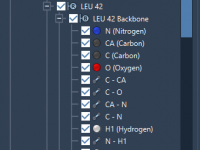
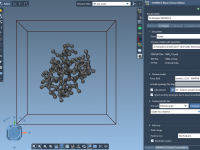
One of the most common challenges in molecular modeling is maintaining clarity in complex scenes. When visualizing large biomolecular systems—like proteins, nucleic acids, or ligands in crowded environments—researchers often find themselves overwhelmed with visual clutter that can obscure important details.…

Breathing Life Into Molecular Models With Pulse Animation

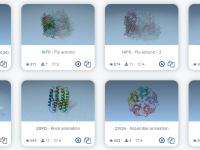
Creating compelling molecular animations can be challenging, especially when your goal is to capture attention or communicate a dynamic process effectively. Perhaps you’ve built a beautiful molecular assembly, set up the perfect camera angle, and composed the ideal scene—but something…

Quickly Export DNA Designs to oxDNA with Adenita

One of the most common hurdles for researchers and students working in DNA nanotechnology is moving from an intricate 3D design to physical simulation. Whether you’re studying system stability, strand dynamics, or molecular interactions, having your model in a simulation-ready…

Reverse Trajectories Without Recalculating Them

Have you ever needed to visualize a molecular trajectory in reverse, perhaps to observe how a system returns to its original conformation or to showcase reversible dynamics in a presentation? Rather than exporting or recalculating the trajectory backwards, you can…

Filtering Molecular Structures by Atom Count in SAMSON

Molecular modelers frequently handle large systems where it becomes essential to quickly identify and isolate components based on their structural complexity. For example, you may want to focus on models with fewer than 100 atoms for quantum calculations, or select…

Keeping Your Molecular Views Consistent in Animations

When creating animations of molecular systems, one common frustration many modelers face is the inconsistency of camera angles between frames. You might carefully structure a scene, but after navigating through your document or tweaking objects, the system’s viewpoint can change…