



Author: OneAngstrom
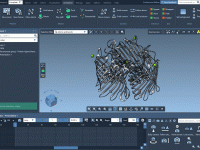
Control Label Display with Precision in SAMSON.
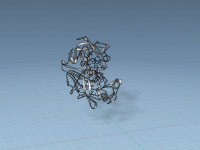
Simplifying Protein-Ligand Docking with AutoDock Vina Extended
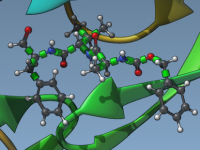
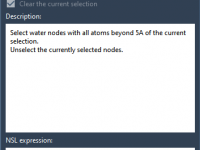
Streamlining Molecular Simulations: Removing Crystal Waters Outside the Active Site.
Vertical Exploration Made Easy with the Pedestal Camera Animation in SAMSON
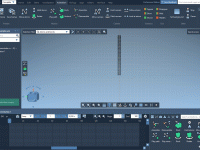
Mastering Visibility with the Show Animation in SAMSON
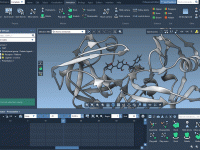
For molecular modelers and designers, creating intuitive and visually striking animations can be critically important. Whether you are presenting molecular transitions or preparing educational materials, animations that clearly and effectively represent molecular states and processes are essential. But here’s a…
Mastering Label Visibility in Molecular Models
Mastering Range Angles for Efficient Protein Docking
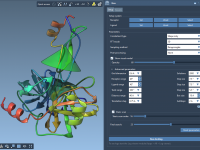
Streamlining Your Molecular Design Workflow with Multiple Cameras in SAMSON
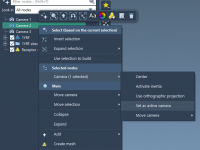
Molecular modeling often requires visualizing complex 3D structures from various perspectives. Whether you’re switching between close-up views of atomic interactions and full-scale molecular assemblies, or comparing projections, the ability to manage camera views efficiently is key to a smoother workflow.…
Master Rapid Pattern Creation with SAMSON’s Pattern Editors
For molecular modelers, creating intricate nanoscale structures often requires significant time and effort. Whether you’re working in nanotechnology, biomolecular modeling, or material science, designing complex molecular patterns quickly and efficiently can be a challenging task. Fortunately, with SAMSON’s Pattern Editors,…