Author: OneAngstrom

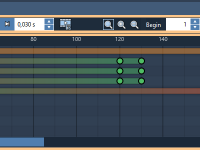
Making Your Molecular Animations Slide-Like with Stop
Mastering Node Group Attributes for Efficient Molecular Modeling
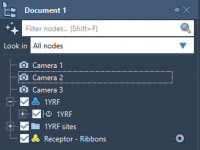
Mastering Camera Views: A Guide to Efficient Molecular Visualization in SAMSON
Master Molecular Visualizations with SAMSON’s Visual Presets.
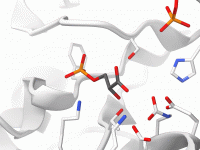
Molecular modelers often face the challenge of visualizing complex molecular systems effectively while maintaining clarity and accuracy. SAMSON simplifies this task with its powerful Visual Presets feature, enabling users to apply rich visual representations and color schemes to molecular structures…
Understanding Light Attributes in SAMSON’s Node Specification Language
For molecular modelers working with computational platforms like SAMSON, managing and organizing data effectively is crucial. One commonly encountered challenge is efficiently interacting with light nodes, especially when dealing with extensive molecular models. The light attribute space in SAMSON’s Node…
Simplify Polymer Design with Custom Sequences in SAMSON
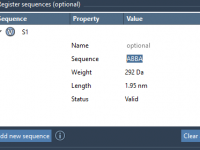
Designing complex polymers is often a complicated and time-consuming task for molecular modelers. Whether working on synthetic polymers, biomaterials, or molecular scaffolds, creating accurate models is essential for property prediction and simulations. SAMSON’s Polymer Builder provides a streamlined way to…
Mastering Custom Molecular Dynamics Parameters in GROMACS Wizard

For molecular modelers and simulation experts, configuring molecular dynamics parameters in your workflow can often feel like navigating uncharted waters. While default settings may generally suffice, there are times when achieving specific results requires tweaking advanced parameters. If this scenario…
Simplify Your DNA Origami Workflow with Reusable DNA Nanostructures

Designing DNA nanostructures is an intricate and rewarding process, but starting every design from scratch can be time-consuming and inefficient. Whether you’re working on prototyping DNA origami, preparing models for simulation, or integrating them with proteins, reusing existing high-quality structures…