Designing Molecules in 2D While Staying in Sync with 3D

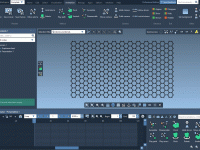
Designing molecules is one of the central tasks in molecular modeling. But when it comes to building or editing small molecules—especially during early-stage design or cleaning up structures—many scientists still rely on separate 2D sketching tools, later importing their work…

Avoid Common Pitfalls When Setting Up Production MD Simulations

One challenge that many molecular modelers face with molecular dynamics (MD) simulations is ensuring continuity and consistency between equilibration and production runs. It may sound trivial, but mistakes in setup parameters—particularly when switching from NPT or NVT equilibrations to production—can…

How to Save Time Designing Complex Polymer Sequences

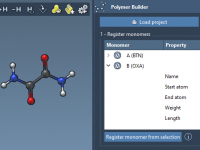
Designing polymers with custom sequences can be repetitive and tedious, especially when you’re experimenting with variations of monomer units. If you’ve ever found yourself manually repeating patterns or trying to track down bond types between units, there’s a more efficient…

Smooth Molecular Motion: A Practical Guide to Atom Animation in SAMSON

When preparing scientific presentations or molecular animations, one common frustration faced by structural biologists and molecular modelers is presenting complex atomic transformations in a clear, smooth, and repeatable way. Often, the motion of molecules is illustrated frame-by-frame, requiring tedious positional…

Why Only One Editor Can Be Active at a Time in SAMSON

When working with complex molecular models, it’s easy to get pulled in many directions—building structures, editing geometries, running analyses, visualizing data. With so many tools available in SAMSON, some users wonder why the platform restricts them to using only one…

Making Atoms Appear When You Want Them To

Molecular animations are a powerful way to explain complex ideas—especially when presenting dynamic molecular processes such as docking, conformational changes, or molecular interactions. However, many researchers and educators struggle with getting things to appear exactly when they want during a…

A Faster Way to Refine Molecular Transition Paths in SAMSON

When modeling molecular systems, capturing the transition between two stable states can be crucial—whether you’re studying ligand unbinding, protein conformational changes, or reactions at the atomic level. Molecular modelers often face the challenge of refining the rough paths generated from…