



Author: OneAngstrom
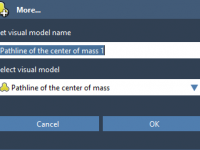
Tracking Molecular Motion with Center-of-Mass Pathlines in SAMSON
Tired of Format Frustration? Here's How Molecular Modelers Can Streamline File Imports
Filtering Molecular Backbones by Atom Count in SAMSON
When studying large molecular systems, zooming in on relevant structural groups is essential. Whether you’re analyzing protein backbones, coarse-grained models, or complex supramolecular assemblies, being able to filter groups of atoms based on structural attributes saves considerable time and helps…
How to Limit the Protein Docking Search Space in Hex
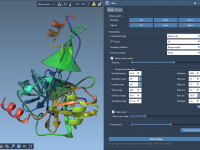
A straightforward way to export ligand trajectories from SAMSON
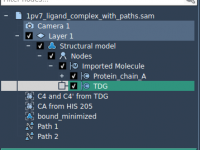
Why Understanding Node Types in SAMSON Can Save You Hours
Filtering Structures by Atom Count in SAMSON’s NSL
Switching Selections Fast When Modeling Molecules
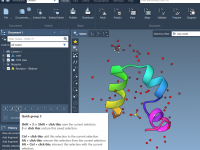
From Conformations to Clearer Pathways: A Quick Optimization Strategy
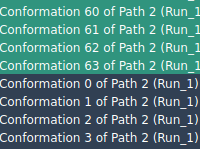
When modeling molecular systems, capturing the transition between two known structures—say, a ligand binding or unbinding event—often involves generating intermediate conformations. Although these conformations may be linearly interpolated or derived using dedicated algorithms like the Ligand Path Finder, they rarely…