Author: OneAngstrom

Choosing Discrete Color Palettes That Make Molecular Models Clearer

Color can make or break the interpretation of molecular models. For researchers and designers working in molecular science, the right color palette isn’t just aesthetic—it’s essential for accurate, effective communication. Whether you’re analyzing large biomolecular systems or visually presenting molecular…
From One Chain to the Whole Assembly: Understanding Symmetry in Protein Structures
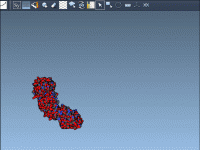
Getting Molecules Moving: A Practical Guide to the Undock Animation in SAMSON

Setting up realistic presentations of molecular interactions often involves visualizing molecules transitioning between docked and undocked states. Whether you’re demonstrating a ligand leaving a binding pocket, or separating structural elements for clarity, precise control over these animations can make your…
Controlling Document Visibility When Collaborating in SAMSON

Making Molecules Appear on Cue with the Shown Animation in SAMSON
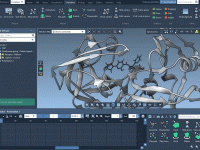
When creating presentations or tutorial videos in molecular modeling, clarity and flow are critical. One common challenge is controlling when specific molecular structures appear, particularly when building complex animations step-by-step. Simply adjusting transparency can make objects hard to see or…
Mathematical Expressions for Selecting Atoms in Molecular Models

Prefer Precision? Build Carbon Nanotubes with a Visual Interface
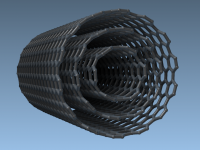
Molecular modelers working with carbon nanotubes (CNTs) often need precise control over nanoscale parameters. Whether you’re modeling molecular transport, exploring electronic properties, or constructing nanoelectromechanical systems (NEMS), the geometry of your nanotubes matters. One common challenge is reproducibly designing CNT…