



Category: Uncategorized
Toggling Molecular Model Visibility with NSL Made Simple
Making Smooth Molecular Flythroughs with Keyframes in SAMSON
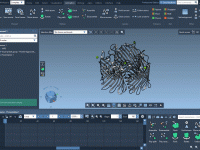
Creating engaging molecular animations can be time-consuming, especially when trying to guide the viewer’s attention across complex molecular structures. One of the common frustrations among structural biologists, medicinal chemists, and molecular modelers is achieving smooth camera movements that emphasize the…
A Smooth Entrance: Making Molecular Elements Appear Gradually in SAMSON
Managing Your SAMSON Extensions: Add, Try, Subscribe & Remove with Ease
Why hiding atoms is more useful than making them transparent
Easily Filter Molecular Paths by Atom Count in SAMSON
Making Atoms Dance: Keyframed Motion in Molecular Animations
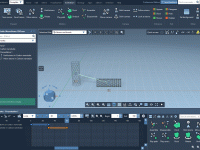
Creating engaging molecular animations is essential for presentations, teaching, or visually exploring structural transformations. But here’s a common challenge molecular modelers face: how to precisely control the motion of atoms over time without writing complex scripts or using several disconnected…
Quickly Isolate Cameras in Complex Molecular Documents
Choosing Better Discrete Color Palettes for Clearer Molecular Models
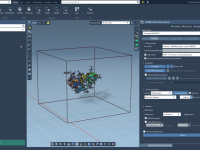
Toggling Molecular Model Visibility with NSL Made Simple
Making Smooth Molecular Flythroughs with Keyframes in SAMSON
Creating engaging molecular animations can be time-consuming, especially when trying to guide the viewer’s attention across complex molecular structures. One of the common frustrations among structural biologists, medicinal chemists, and molecular modelers is achieving smooth camera movements that emphasize the…
A Smooth Entrance: Making Molecular Elements Appear Gradually in SAMSON
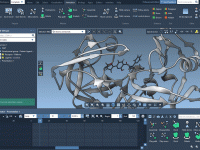
Managing Your SAMSON Extensions: Add, Try, Subscribe & Remove with Ease

Why hiding atoms is more useful than making them transparent
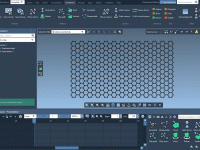
Easily Filter Molecular Paths by Atom Count in SAMSON
Making Atoms Dance: Keyframed Motion in Molecular Animations
Creating engaging molecular animations is essential for presentations, teaching, or visually exploring structural transformations. But here’s a common challenge molecular modelers face: how to precisely control the motion of atoms over time without writing complex scripts or using several disconnected…
