



For molecular modelers working with solid-state materials, understanding and manipulating crystal structures is essential. But cutting crystals along specific directions—especially when dealing with Miller indices—can be confusing or tedious in many software environments.
If you’re using SAMSON, the integrative molecular design platform, there’s a neat built-in feature in the Crystal Creator Extension that allows you to precisely cut crystals using Miller indices. Whether you’re preparing a surface model or analyzing crystalline planes, this tool streamlines the process.
Why Slice Crystals at All?
Cutting a crystal along specific crystallographic directions allows researchers to:
- Expose surfaces for adsorption studies
- Simulate cleavage planes and fracture behavior
- Create slab models for quantum or molecular dynamics simulations
- Investigate properties like surface energies and defect dynamics
How to Cut Crystals in SAMSON
To get started, you’ll need to load a crystal using a .cif file—many are available from trusted databases like the American Mineralogist Crystal Structure Database or RRUFF.
Once imported, here’s how to cut it:
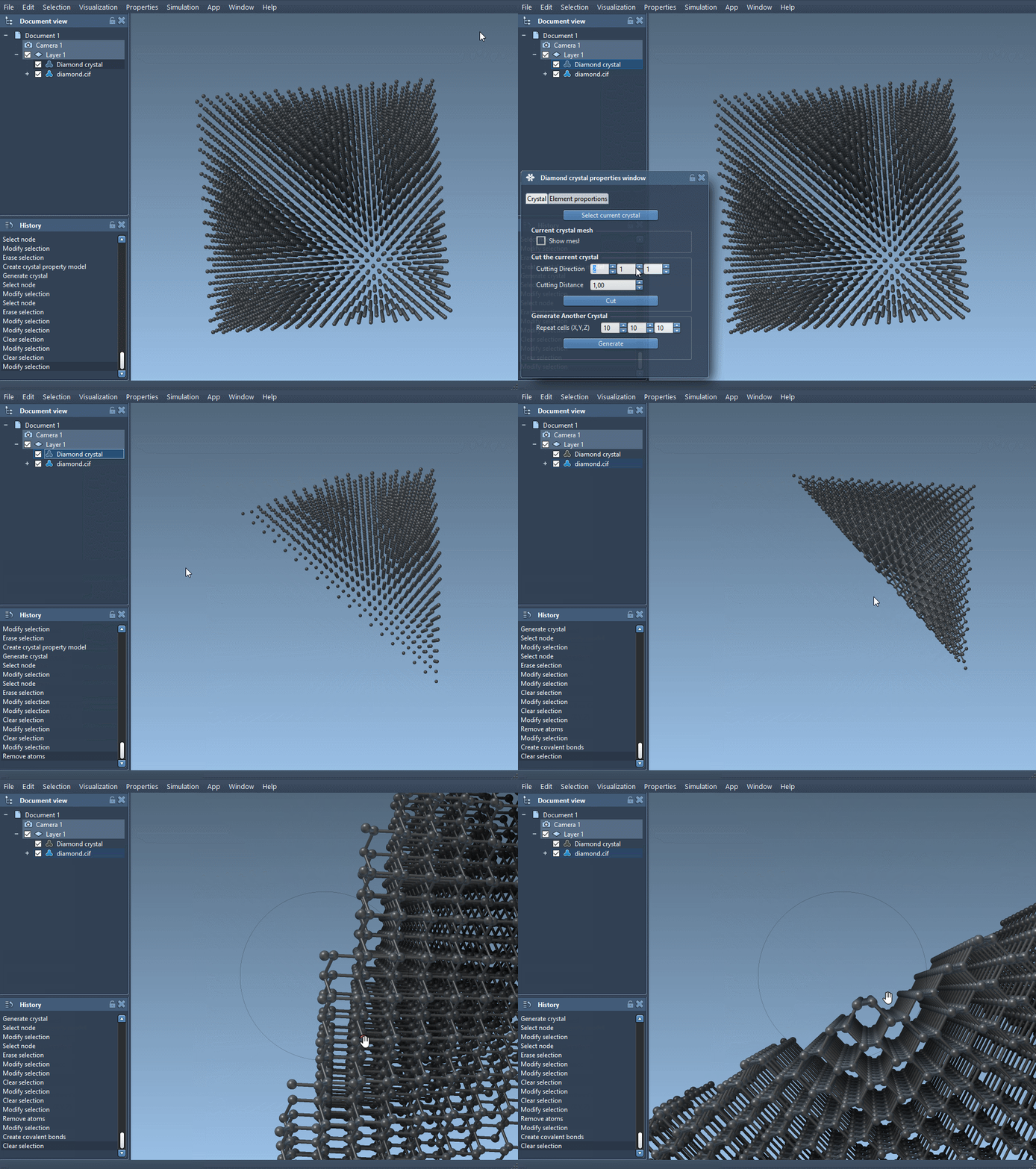
- Right-click on the crystal’s property model in the Data Graph and choose Properties.
- In the first tab, you’ll see a toolbox specifically for cutting crystals.
- Enter the three Miller indices in the boxes marked for cut direction (defaults are typically [1,0,0]).
- The fourth box lets you specify the distance from the origin where the cut will be made.
- Visualize the structure immediately in your scene.
Let’s say you load a diamond structure and cut along the [111] plane. You’ll see the layered atomic configuration characteristic of hexagonal packing in diamond. It’s a fast and visual way to understand material properties—and great for teaching or presentations too. 👩🏫
Inspecting and Validating Your Cuts
SAMSON also includes a validation step. In the second tab of the Crystal Creator’s property window, there’s a tool labeled check atoms ratio which ensures that the atomic composition remains consistent with the CIF data, including any defects or partial occupancies defined in the input file.
Pro Tip: Use This for Surface Chemistry
This features pairs well with SAMSON’s other plugins. Once you’ve created a surface using a cut, you can continue to:
- Minimize the structure with interaction models like Brenner’s
- Add adsorbates or substitutions manually
- Apply periodic boundaries for simulation
In short, what used to be a time-consuming task involving manual coordinate editing or external scripts can now be done with a few clicks directly inside SAMSON’s interface.
Explore More
To learn more about cutting and manipulating crystals in SAMSON, check the full tutorial at the official documentation page: https://documentation.samson-connect.net/tutorials/crystal-creator/generating-crystal-models/
SAMSON and all SAMSON Extensions are free for non-commercial use. You can download SAMSON at https://www.samson-connect.net.