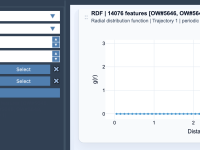
A molecular structure can look crowded without telling you which neighbors matter. Is a solvent gathering around a ligand? Are two selected groups repeatedly found at particular separations? A radial distribution function (RDF) helps turn those questions into a distance-based…
A molecular structure can be scientifically meaningful and still be difficult to read on screen. Maybe the view feels cluttered, important regions do not stand out, or a screenshot that looked fine during exploration is not ready to share. These…
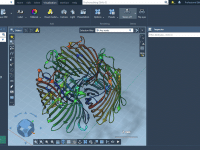
A molecular structure can contain thousands of residues, but many modeling tasks begin with a much smaller question: Which residues belong to a particular secondary structure, have a certain charge, or fall within a sequence-number range? Finding the right subset…
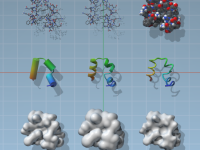
A molecular model can be visually clear and still hide the information you need. A single color may make a structure look tidy, but it cannot distinguish chains, highlight residue properties, or show how an atomic value changes across a…
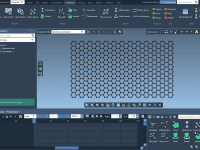
Finding the right atoms in a large molecular structure can become a task of its own. You may need only the protein backbone, a few residue numbers, aromatic carbons, or atoms in a particular region of space. Clicking through the…
A SAMSON Extension that worked yesterday may not load after an update—or a newer extension may not appear to install. For molecular modelers, that can interrupt a workflow just when a project needs to be opened or continued. One useful…
A molecular model can be difficult to explain when every atom and bond appears at once. The viewer sees the finished structure, but not necessarily the part you want them to notice first. A progressive reveal can make a presentation…
A molecular scene can show atoms, surfaces, fields, forces, and motion-related information side by side. When you select an item in the Document view, it is not always obvious what role it plays: does it describe the molecule’s structure, change…
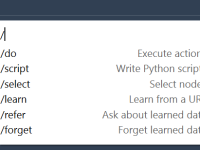
A familiar modeling task can involve several small, interruptive steps: find a molecular component, select it, change its representation, inspect a region, then repeat. The challenge is not always the science—it is remembering where each action lives and translating an…
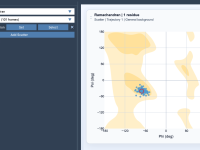
A protein structure can look reasonable at the start and end of a simulation or modeled path while behaving unexpectedly in between. A loop may shift, a residue may adopt an unusual backbone conformation, or a transition may be difficult…