From Two Protein Structures to a View of Motion

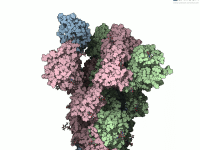
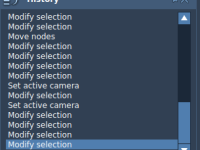
A molecular modeler often has two structures of the same protein and a practical question: how might the molecule move between them? The endpoint structures show where the protein starts and ends, but not the transition. Building a path is…

Before You Pull a Molecule, Give It Room to Move

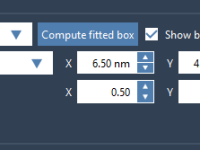
Steered molecular dynamics can look straightforward: choose a molecular group, apply a pulling coordinate, and run a simulation. But one setup decision can undermine the whole calculation before it begins: the periodic box may not leave enough room for the…

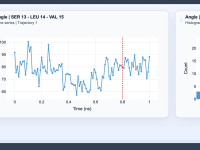
When a Protein Bends, Track the Angle That Tells You

A molecular trajectory can contain hundreds or thousands of frames, but a visual inspection may not tell you exactly when a hinge opens, a loop bends, or two structural regions change their relative orientation. Measuring the distance between two groups…

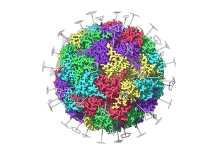
When a molecular assembly has more than one possible symmetry

A large molecular assembly can look orderly without making its symmetry obvious. Repeated subunits may suggest one arrangement, while the full structure supports several plausible symmetry groups. For a molecular modeler, that uncertainty matters: choosing the wrong group can send…