Skip to content
YouTube Twitter RSS AboutMe Mail
SAMSON Blog
Skip to content
  • Latest posts
  • Get SAMSON

From One Scaffold to a Focused Set of Molecular Analogues

OneAngstrom

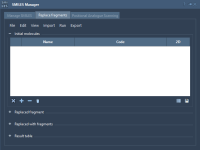
A familiar bottleneck in molecular modeling is exploring alternatives to one part of a molecule. Editing each SMILES string by hand can be slow, and small syntax mistakes can make a candidate unusable. A more systematic approach is to define…

Lost in the Lookup? A Practical Map to SAMSON References

OneAngstrom

When you are working on a molecular model, a small question can interrupt a much larger task: Which node type am I looking at? Where are the camera settings? Which formats can I import? The challenge is often not finding…

From Unit Cell to Crystal: A Practical Guide to Building Periodic Models

OneAngstrom

A crystal model can be tricky to build for a simple reason: a short list of atom coordinates represents a structure that repeats throughout space. If the unit-cell shape, coordinate convention, or atom positions are entered incorrectly, the resulting model…

From sequence to a useful model: choosing the right prediction workflow

OneAngstrom

A structure-prediction run can stall before it starts for a surprisingly ordinary reason: the input does not match the service. You may have a FASTA file, a ligand SMILES string, a CCD code, or a system that needs a restraint—and…

One Active Tool, Many Possibilities: Finding the Right SAMSON Editor

OneAngstrom

When a molecular modeling task stalls, the problem is not always the structure. Sometimes the active tool is simply not the one you need. You may be trying to select atoms while a transform tool is active, or looking for…

From sequence to structure: choosing the right prediction setup

OneAngstrom

A structure prediction can stall before it begins—not because the biology is unusually complicated, but because the input is not ready. A sequence may be in a FASTA file, a ligand may be described by a SMILES string, or a…

The minimization finished. Is your system actually ready?

OneAngstrom

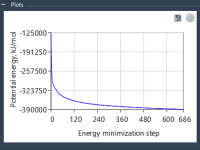
A molecular system can finish an energy-minimization run and still not be ready for equilibration. That is a common source of uncertainty: the job has completed, the energy has dropped, and there is a plot—but what tells you whether the…

Make molecular motion easier to follow: plan the animation before you press play

OneAngstrom

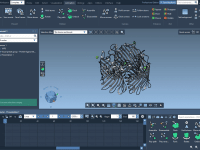
A molecular animation can be technically correct and still be hard to understand. The camera moves, the structure changes, and the viewer is left wondering what they were supposed to notice. For modelers preparing a presentation or movie, the useful…

Give Molecular Presentations a Camera Path Viewers Can Follow

OneAngstrom

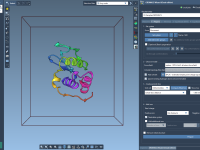
A molecular model can be correct and still be difficult to understand if the camera moves unpredictably. A sudden change of viewpoint may leave viewers unsure which part of a protein, complex, or assembly they are meant to examine. When…

Before the First GROMACS Run: A Practical Setup Check

OneAngstrom

A molecular system can look ready for simulation while still hiding setup problems: a box that is too tight, ligand parameters that do not match the chosen force field, or hydrogens named in a way the force field does not…

«‹205206207208209›»
  • Subscribe for tips and news

    Check your inbox or spam folder to confirm your subscription.

  • About
  • Privacy Policy
  • Terms of use
  • Contact us
  • Twitter
  • Facebook
  • Back to Top
Powered by Nirvana & WordPress.