Simplifying SAMSON Installation on Linux Systems

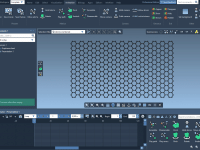
For molecular modelers working with Linux, ensuring that your system meets the software requirements for a platform like SAMSON is essential. Linux offers powerful flexibility, but certain dependencies must be set up to guarantee a smooth installation and operation of…

Understanding SAMSON’s Property Model Attributes

Molecular modelers often struggle with organizing and customizing the properties of molecular nodes during their design workflows. Whether you’re sorting structures based on visibility, material ownership, or custom naming, the Property Model attribute space in SAMSON simplifies these processes significantly.…

Enhancing Molecular Depth with Ambient Occlusion in SAMSON.

Molecular modeling often requires a clear understanding of spatial depth and structural relationships. However, the lack of visual cues for depth perception in rendered molecular scenes can make it challenging to intuitively analyze these models. This is where “ambient occlusion”…

Understanding Mesh Attributes in SAMSON: A Quick Guide

Molecular modeling often requires users to finely control and customize meshes to accurately represent molecular structures or simulations. Have you ever wondered how to work efficiently with mesh-specific properties? With SAMSON’s integrative molecular design platform, the mesh attribute space in…

Understanding Residue Polarity in Molecular Modeling

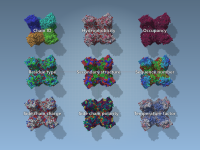
For molecular modelers striving to analyze residue polarity effectively, the residue.polarity attribute from SAMSON’s Node Specification Language (NSL) offers an accessible and flexible approach. Understanding polarity is essential for tasks ranging from protein folding analyses to assessing molecular interactions. This…