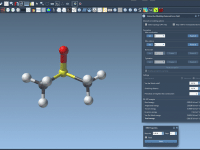
Moving atoms in a molecular model can quickly become frustrating when the structure’s connectivity is fixed. A bond that should break may keep pulling atoms together; atoms brought close enough to connect may remain separate. In these situations, the challenge…
A molecular presentation can move through a structure faster than an audience can take it in. That is especially noticeable when you need to explain a binding site, point out a change, or give people time to compare what they…
A close-up can make a molecular structure easier to inspect—but changing the view can also make a carefully framed scene feel disorienting. If the camera’s point of focus shifts while you zoom, visual effects tied to that point, such as…
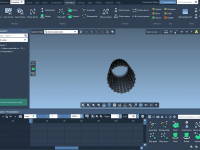
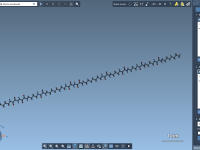
Building a polymer model from individual molecular fragments can become tedious quickly. You need to keep track of which units connect, how often they repeat, and whether a connection should be single, double, or triple. If you also need to…
A crystal model can look plausible and still be difficult to trust. The unit cell may be entered with the wrong coordinate convention, a cut may not expose the structure you expected, or partial atom occupancy in a CIF may…
A problem in a molecular modeling session can be surprisingly hard to search for. Is it a common account or installation question? A platform issue that needs troubleshooting? Or do you simply need the authoritative details for a particular feature?…
A molecular scene can contain all the right information and still be difficult to read. Atoms and structures overlap, depth is unclear, and jagged edges distract from the features you want to inspect. Before changing the molecular model, try adjusting…
When a molecular scene contains many objects, a light node can be easy to overlook. That makes small tasks—such as checking which lights are hidden, finding a light by name, or narrowing a search to lights rather than other node…
When a molecular model contains many conformations, finding the paths relevant to a particular task can become a small but persistent annoyance. A long list of paths is hard to scan, and names alone may not tell you which conformations…
When a molecular scene contains several lights, a small bit of housekeeping can become a distraction: Which lights are hidden? Which are visible? What was that light called? SAMSON’s Node Specification Language (NSL) lets you describe light nodes with concise…