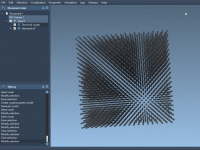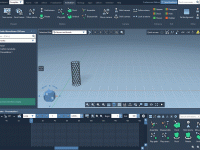
Making Molecular Models Shine: Understanding Light Attributes in SAMSON
Understanding File Node Attributes in SAMSON
Fine-Tune Molecular Visualization with Camera Attributes in SAMSON
Visualizing molecular systems accurately and effectively is crucial for molecular modelers to gain insights, present their findings, and conduct precise analyses. One often overlooked feature that can significantly enhance this experience in SAMSON, the integrative molecular design platform, is the…
Decoding Atom Attributes in NSL for Smarter Molecular Modeling
Mastering Dynamic Focus with the Dolly Camera Animation in SAMSON
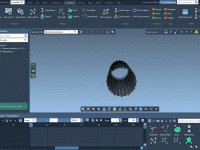
Understanding File Attributes in SAMSON’s Node Specification Language
Mastering Path Animations in Molecular Modeling: A Quick Guide
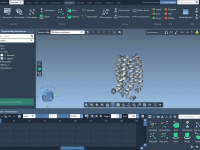
Simplify Protein-Ligand Docking with the FITTED Suite in SAMSON
For molecular modelers tackling complex protein-ligand interactions, balancing speed and precision in docking simulations can often feel like navigating a maze. The FITTED Suite SAMSON Extension, developed in collaboration with Molecular Forecaster, provides a streamlined solution, automating both covalent and…