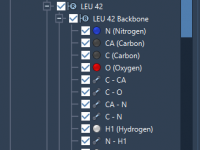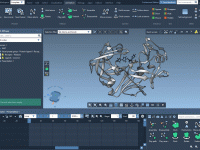
Quickly show or hide molecular elements using NSL’s presentation attributes
Molecular modelers often manipulate large, complex systems composed of many structural and visual elements. Whether you’re highlighting specific atoms for analysis or preparing a figure for publication, controlling the visibility of these elements is essential. However, manually toggling visibility through…
Avoid Drifting Ligands: Proper Energy Setup in Ligand Unbinding Simulations
Tired of Switching Between Tools? Here’s How You Can Integrate Your Workflow in SAMSON
Local GROMACS Simulations Without Slowing Down Your Computer
Tired of Losing Molecular Motion Details? Try This Simple Recording Trick
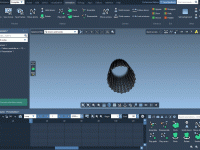
Which Unit Cell Should You Choose for Periodic Boundary Conditions?
Avoid Sampling Pitfalls: How to Set Up a Ligand for Pathway Discovery
Filtering Structural Groups by Partial Charge in SAMSON
When working with molecular models and simulations, it’s often important to quickly locate molecular fragments with specific electronic characteristics. One common use case: identifying structural groups with a particular range of partial charges — whether for reactivity analysis, parameter tuning,…
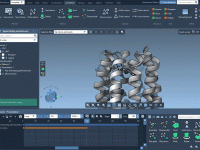
Previewing Protein Symmetry in Real Time Without Committing
When working with crystallographic or biological assemblies of proteins, understanding how subunits are arranged is essential. Whether you’re modeling quaternary structures or designing symmetric nanostructures, replicating and visualizing symmetric interfaces can be a key step. But generating all symmetry mates…