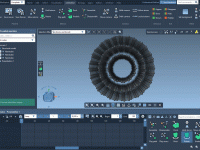
Previewing Protein Symmetry in Real Time Without Committing
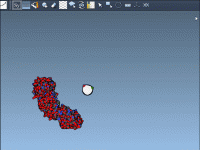
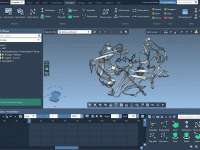
When working with crystallographic or biological assemblies of proteins, understanding how subunits are arranged is essential. Whether you’re modeling quaternary structures or designing symmetric nanostructures, replicating and visualizing symmetric interfaces can be a key step. But generating all symmetry mates…
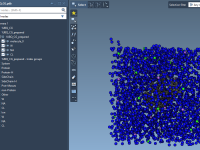
A Simple Trick to Highlight Molecular Structures in Motion

Communicating a molecular mechanism often means going beyond static images. Whether you’re presenting a conformational change, a binding process, or a protein-ligand interaction, being able to illustrate spatial structure clearly is essential. One common challenge? Providing viewers (or yourself) with…

Progressively Hiding Atoms to Clarify Molecular Presentations

When molecular models become dense or structurally complex, it’s easy to lose track of key regions in your presentation. Whether you’re demonstrating binding interactions, structural differences, or pathway progression, isolating areas of interest can be crucial for communication. The Conceal…

Installing SAMSON Without Admin Rights: A Relief for Molecular Modelers

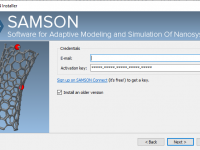
Many molecular researchers experience a common yet frustrating obstacle: installing advanced molecular modeling tools on systems where administrative permissions are limited or completely restricted—especially in academic institutions, shared labs, or virtual environments. If you’ve ever faced such a hurdle, you’ll…

Making Molecular Models More Intuitive with the Rotate Animation

When modeling molecular structures, clearly communicating spatial arrangements and transformations is essential. Whether preparing a teaching animation, capturing how molecules interact, or simply visualizing molecular conformations, one common need is to rotate a group of atoms to better convey a…