



Author: OneAngstrom
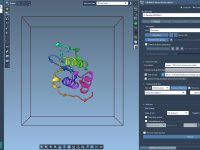
Effortlessly Manage Timing with the Pause Animation in SAMSON
Track Molecular Dynamics with Center-of-Mass Pathlines.

Visualizing molecular motion is crucial for understanding complex biological processes such as ligand unbinding, protein conformational shifts, and diffusion. However, extracting and interpreting these motions can often be challenging for molecular modelers. Did you know that SAMSON, the integrative molecular…
Master Horizontal Camera Movements with the Truck Camera Animation
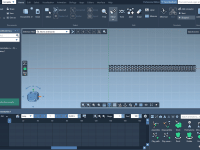
Streamlining Molecular Dynamics with the Undock Animation in SAMSON
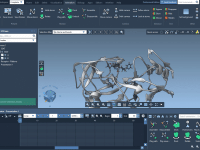
Maintaining Your Ideal Molecular View with ‘Hold Camera’ in SAMSON
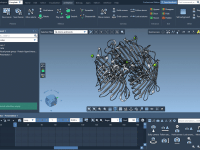
Effortless Molecular Navigation: How to Change the View in SAMSON
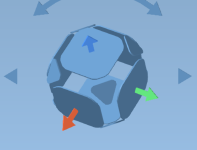
Mastering Visibility Controls for Your Molecular Models in SAMSON
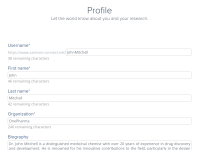
How to Create a Public Profile with SAMSON Connect
Exploring Visual Models in Molecular Design with SAMSON
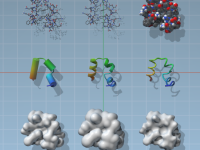
Visualizing complex molecular systems can be a daunting task, particularly for researchers and modelers diving into nanoscale structures. Ensuring the representation is both accurate and intuitive is critical for understanding, analyzing, and presenting nanosystems. Luckily, SAMSON, the integrative molecular design…