Author: OneAngstrom
Understanding Molecular Flexibility: Measuring Dihedral Angles in SAMSON
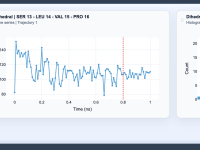
As a molecular modeler, understanding how molecules change conformation is crucial for analyzing their behavior, stability, and function. One common challenge is tracking torsional transitions, such as rotamer changes or collective twisting motions, across complex molecular trajectories. This is where…
Effortlessly Pause Your Molecular Presentations with Stop Animation
Streamlining Protein Structure Prediction with AlphaFold-2 in SAMSON.
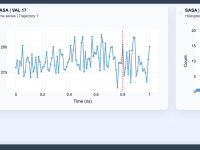
Analyzing Solvent-Accessible Surface Area (SASA) to Track Molecular Dynamics
Efficient Molecular Filtering with Structural Model Attributes in SAMSON
Mastering Editor Navigation in SAMSON: A Quick Guide for Molecular Modelers
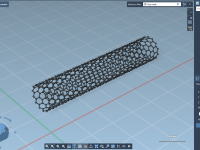
Improving Molecular Simulations with Constrained Approaches
Constrained Molecular Simulations: Why They Matter Molecular modeling frequently requires precision, especially when simulating complex nanosystems. One of the common challenges molecular modelers face is ensuring that specific constraints are maintained during simulations. Whether you are working on protein folding,…
Making Sense of Energy Paths in Molecular Design.
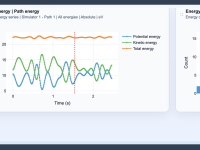
Understanding energy profiles is a critical aspect of molecular modeling and design. Whether you’re analyzing reaction mechanisms, simulating conformational changes, or optimizing molecular properties, energy calculations play a central role. The Path Analyzer in SAMSON offers a powerful and intuitive…