Filtering Side Chains by Atomic Composition in SAMSON

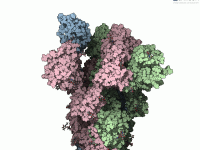
When analyzing macromolecular structures, it’s common to focus on particular subsets of residues—like side chains with a certain number of atoms, or ones rich in specific elements. Whether you’re modeling the behavior of hydrophobic patches or analyzing charged environments, being…

Avoiding Topology Errors When Modeling Protein Replicas in MARTINI

Creating coarse-grained (CG) models is essential for running molecular dynamics simulations efficiently, especially with force fields like MARTINI. But if you’ve ever worked with multiple replicas of a protein structure—say, for studying multimeric interactions or crowded environments—you might have run…

Making Molecules Appear One Atom at a Time

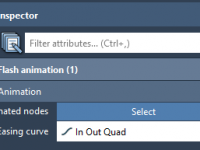
Presenting molecular processes to diverse audiences — from researchers to students — often requires more than static snapshots. Animations play a key role in making molecular simulations more comprehensible and visually intuitive. One common challenge for many molecular modelers is…

Vertical Camera Moves Made Easy in Molecular Presentations

When preparing scientific animations for molecular models, showing structural transitions or navigating through large assemblies, how the camera moves across frames can make a substantial difference. Many molecular modelers encounter a recurring challenge: smoothly moving the camera vertically through their…

Why Only One Editor is Active at a Time in SAMSON

When working with complex molecular systems, molecular modelers often need to alternate between creating, modifying, and analyzing structures. SAMSON provides a modular approach to streamline this workflow through the concept of editors: dedicated tools that let you perform specific interactive…