Author: OneAngstrom
A Guide to Chain Attributes in SAMSON's Node Specification Language
A Practical Guide to Speedy Molecular Pattern Creation in SAMSON
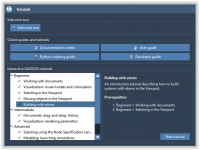
In molecular modeling and nanoscale design, repetitive pattern creation is often unavoidable. Whether you're assembling nanotubes, modeling biomolecular systems, or engineering advanced materials, manually positioning individual structures can become both time-consuming and error-prone. Enter Pattern editors in SAMSON—a set of…
Simplifying Carbon Nanotube Modeling with SAMSON
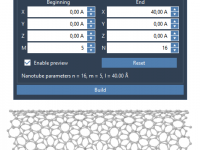
Carbon nanotubes (CNTs) have become an invaluable resource in the fields of molecular design, nanotechnology, and materials science. Their unique properties make them essential for building nanodevices, studying electronic properties, or even simulating molecular transport systems. However, designing accurate CNT…
Exploring Node Types: A Quick Guide for Molecular Modelers
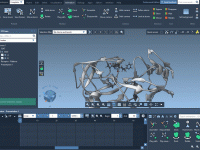
Enhance Molecular Visualization with SAMSON’s Visual Models
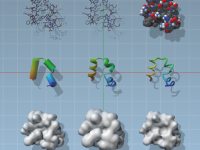
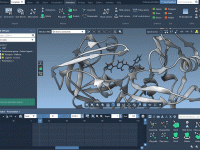
How to Define the Sampling Box in Ligand Path Finder
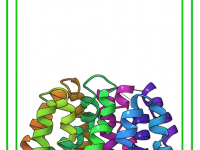
Streamlining Molecular Visualizations with Custom Visual Presets
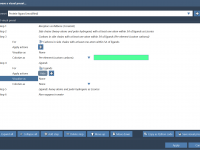
Molecular modelers often grapple with the challenge of effectively visualizing complex molecular systems. Representing a protein, ligand, or a supramolecular structure in a clear and precise manner, especially for collaboration or presentations, can be time-consuming. SAMSON’s Visual Presets feature offers…