Practical Strategies for Colorizing Molecular Models in SAMSON

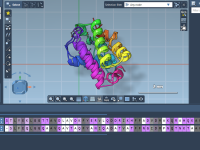
Colorizing molecular models is a critical step in molecular design workflows. It not only makes models visually engaging but also aids significantly in data interpretation. SAMSON, the integrative molecular design platform, offers rich tools to colorize structural nodes, visual models,…

Exploring Residue Polarity in Molecular Modeling

In molecular modeling, understanding the polarity of residues is essential for comprehending their biochemical functions and interactions. Residue polarity determines how a molecule interacts with its environment, influencing functions like solubility, binding affinity, and overall molecular stability. Let’s explore how…

Navigating Your SAMSON Workflow with the History Panel

For molecular modelers, managing complex workflows often involves numerous iterative steps. Mistakes or the need to revisit earlier stages are inevitable, but losing progress or struggling to undo operations can be frustrating and time-consuming. This is where SAMSON’s History panel…

Streamline Molecular Modeling with Molecule Attributes in SAMSON

Molecular modelers often face challenges when working with large sets of molecules. Filtering or identifying specific molecules based on properties can become tedious without the right tools. Thankfully, SAMSON’s Node Specification Language (NSL) provides a practical solution for tackling this…

Effortlessly Align Protein Structures in SAMSON

Have you ever needed to compare two protein structures and wished for a seamless way to align them? Whether you’re studying conserved residues, analyzing conformations, or building homology models, aligning protein structures is a crucial step for molecular modelers. With…