A molecular model can contain many structural groups, and visual inspection is a poor way to find a group with a particular size, composition, or charge. If you need to narrow down candidates—for example, to locate groups with a certain…
Starting a DNA nanostructure project often means more than finding a shape you like. A design may come as a caDNAno file, an Adenita component, or simulation files—and those formats serve different purposes. It can be easy to lose time…
Few things interrupt a modeling workflow like discovering that a file can be opened in one tool but not saved in the format your next step expects. The extension on a filename is a useful clue, but it does not…
Finding the right atoms in a molecular structure can become tedious when a selection depends on remembering atom names, residue numbering, or chain labels. Names are useful, but they do not always describe what an atom does. In SAMSON, the…
A molecular presentation can move through a lot of information: a structure, a change in viewpoint, an animation, and then the next part of the explanation. But if playback keeps going while you are describing an important frame, your audience…
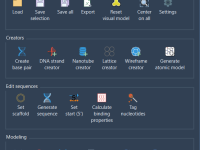
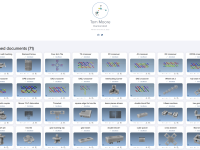
Starting a DNA nanostructure project from a blank canvas can be a surprisingly slow way to begin. You may need a familiar motif, a published example, or simply a test structure to check that your tools are working. The challenge…
When a molecular scene contains many groups, the hard part is often not creating another selection—it is expressing exactly which groups you want to find. A query that matches the wrong kind of node can be confusing, especially when similar…
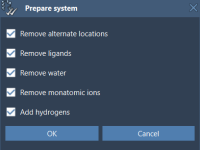
A docking workflow can appear to fail for reasons that have little to do with the docking method or the ligand. The protein structure itself may contain alternate atom positions, missing hydrogens, unnecessary molecules, or geometry problems. These details are…
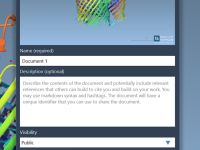
Sharing a molecular model can solve one problem and create another: collaborators need to access the work, but not everyone should necessarily have the same ability to find, use, or edit it. Before sending a document, decide who needs access…
A protein model can look convincing in 3D and still contain local backbone conformations worth checking. The challenge is that a suspicious residue may be hard to spot by eye, especially in a large structure. A Ramachandran plot offers a…