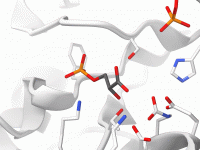
Filtering molecular structures by size can speed up your workflow significantly when working with large and complex models. If you’ve ever struggled to isolate paths with a specific number of atoms in SAMSON, the Node Specification Language (NSL) offers a…
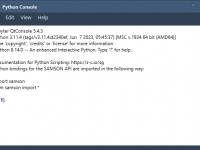
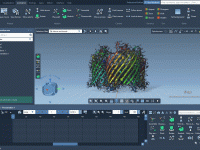
If you’re a molecular modeler, you’re probably all too familiar with repetitive tasks: loading structures, setting up visual styles, preparing systems, analyzing trajectories, and more. These operations can quickly become tedious, especially when they need to be performed multiple times…
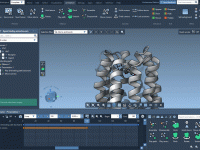
When working with complex molecular trajectories, a common challenge for researchers and molecular modelers is maintaining visual focus on a specific region of the system over time. Imagine you’re simulating a protein-ligand binding event or monitoring the conformational dynamics of…
Finding ligand unbinding pathways through protein tunnels is a common need in molecular modeling. But did you know that the way you define the sampling region can significantly influence the results? In this blog post, we focus on a critical…
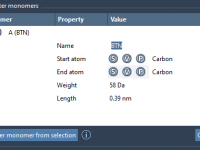
If you’re working with custom polymers, one of the most repetitive (and error-prone) steps in your workflow might be building complex chains from fragments you designed. Whether you’re researching synthetic polymers or developing molecular scaffolds for prediction models, you likely…
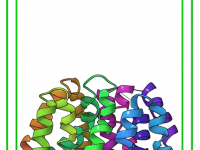
Molecular modeling often requires combining clarity with aesthetic quality. When working with complex biomolecular systems, it can be time-consuming to apply multiple visual layers manually — ribbons for secondary structures, sticks for ligands, van der Waals spheres for ions, color…
Creating compelling molecular presentations can be time-consuming, especially when manually adjusting your camera to depict structures from different angles. If you’ve ever tried to record a fly-around of a protein complex or a crystal structure, you know how hard it…
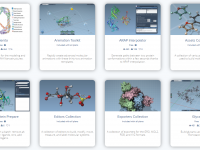
For many molecular modelers, one persistent challenge is finding the right specialized tool for a specific task. Whether you’re visualizing electron densities, editing complex structures, or running cloud simulations, the core installation of a modeling platform might not offer the…
When working with large molecular systems, it’s common to organize atoms and molecules into node groups in SAMSON, the integrative platform for molecular modeling. These groups help you manage complex scenes—from protein-ligand interactions to nanoscale assemblies. But once the complexity…
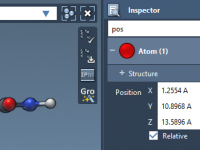
When working on complex molecular structures, it’s easy to feel overwhelmed by the number of properties associated with each atom. Whether you’re adjusting atom positions during molecular modeling or inspecting attributes to verify structural consistency, sifting through all the information…