Streamline Protein Cleanup: Batch Preparation Made Simple

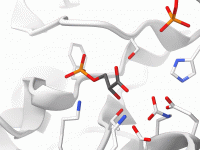
Anyone working with molecular models knows the slow drip of time lost to repetitive cleanup tasks: removing waters, deleting unwanted ligands, fixing missing atoms, and ensuring the structure won’t crash a simulation. It’s manageable when working with one or two…

Finding Molecular Backbones by Property in SAMSON

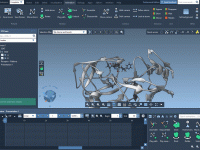
When working on complex molecular models, it’s common to ask very specific questions about a particular system: How many backbone groups have a partial charge above a certain threshold? Which ones are invisible or lack material? Are there backbones with…

Changing Atom Attributes Without Breaking Your Model

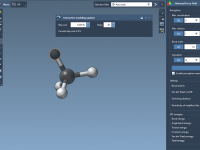
One of the recurring challenges faced by molecular modelers is fine-tuning the structural details of their models without introducing inconsistencies. Whether you’re adjusting atomic positions, types, or making minor corrections in a structure, you often want surgical precision over your…

Quickly Select Charged or Polar Residues Using NSL in SAMSON

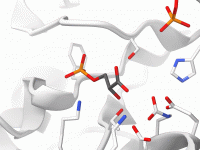
Imagine you’re preparing to simulate a protein in a new solvent environment. One of the first steps is deciding which residues might interact more strongly with the environment—perhaps charged residues for pH-sensitive behavior, or polar residues for solvent-accessible surface analysis.…

Avoid Chain Conflicts When Generating CG Models with Martinize2

When working with coarse-grained (CG) molecular models, it’s common to simulate multiple copies—or replicas—of the same protein in a single system. This setup is especially useful for studies involving protein aggregation, diffusion, or encapsulation. However, many researchers new to coarse-graining…