A production molecular dynamics run is where a prepared system begins generating the trajectory you want to inspect and analyze. But it is also an easy point to lose continuity: selecting the wrong starting structure, changing coupling settings unintentionally, or…
In a molecular scene, labels can be helpful until there are enough of them to compete for attention. A label may identify a residue, a measurement, or a note you added while exploring a structure. When you need to inspect…
A molecular scene can be scientifically informative and still be hard to read. Atom names, residue annotations, and measurement labels may overlap, compete for attention, or disappear when you change the view. The goal is not to label everything at…
Editing a molecular structure can become frustrating when every change seems to create another task: move a fragment, add atoms, arrange copies, then deal with geometry that may need attention. A useful way to keep the work manageable is to…
A molecular animation can become hard to read when every part of a structure moves at once. A receptor may drift while you are trying to show a ligand, or a stable reference region may shift between moments in a…
A molecular structure can be scientifically meaningful and still be difficult to understand at a glance. Atoms overlap, important regions compete for attention, and a view that works while exploring a model may not work in a figure or presentation.…
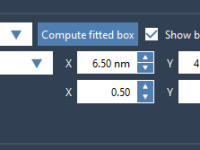
A pulling simulation can be configured correctly in the interface and still run into a basic problem: the system does not have enough room to move in the chosen direction. Under periodic boundary conditions, a molecule that travels too far…
A molecular structure can contain thousands of atoms, but a binding-site question is often much narrower: which receptor residues are near the ligand, which atoms make close contacts, and which nearby waters might matter? Manually building these selections is tedious—and…
A temperature trace that moves up and down can make it hard to decide whether an equilibration run is working. Should you stop when the curve first reaches its target, or keep running until it becomes perfectly flat? In an…
When several molecular components occupy the same crowded view, it can be difficult to show which parts belong together—or simply to reveal what is underneath. Moving objects by hand may help, but it can also make a presentation harder to…