



Mastering NSL Note Attributes in SAMSON
Ensure GPU Compatibility for Smooth Molecular Modeling
Creating Insightful 2D Molecular Interaction Diagrams.
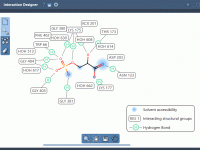
In the field of molecular modeling, understanding and visualizing the interactions between atoms, residues, or molecules is an essential step. Whether you’re working on protein-ligand docking, observing chemical interactions, or refining your molecular structure designs, a clear and interactive diagram…
Building Custom Atomic Shapes with Scripting: A Practical Guide for Molecular Modelers.
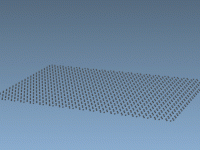
Molecular modelers often face the challenge of creating and modifying atomic structures for experiments, educational purposes, or visualization. One major pain point is achieving this with efficiency and precision while experimenting with unconventional molecular shapes and arrangements. How can you…
Creating Carbon Nanotubes in Minutes with SAMSON’s Nanotube Creator.

Master Static Views with the Hold Camera Animation in SAMSON
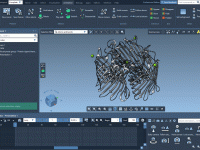
Understanding and Using SAMSON Apps Efficiently
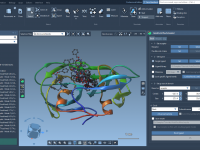
Effortlessly Create Replicas for Coarse-Grained Modeling in SAMSON
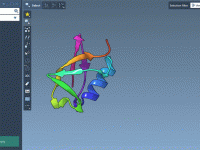
If you are a molecular modeler aiming to create coarse-grained models for systems with multiple replicas, you’ve probably encountered challenges around preparing and organizing replicas of biomolecules. The errors stemming from improper numbering or overlapping structures can significantly disrupt workflows.…