From Molecular Motion to Meaningful Measurements

A molecular trajectory can contain a great deal of information—and still leave you wondering what changed, when it changed, or which interactions matter. The key is to treat simulation and analysis as connected steps, while recognizing that they are separate…

Before You Pull: Get the Periodic Box Right

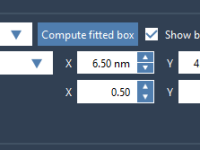
Pulling one part of a molecular system away from another can look straightforward: choose two groups, set a direction, and apply a moving restraint. But in a periodic simulation, the box is part of the experiment. If it is too…

When a Molecule Changes Shape Without Getting Bigger

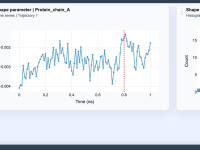
A molecular model can become more elongated, flattened, or otherwise reorganized while its overall size changes very little. That makes a familiar measurement such as radius of gyration useful but incomplete: it describes compactness, not every aspect of global shape.…

From a crowded structure to the residues that matter

When a molecular structure contains hundreds or thousands of residues, finding the few relevant to a question can become a tedious search. You might need to inspect a particular amino acid, trace a sequence range, or distinguish charged side chains…

When Is a Molecular Node Really Visible?

A common source of confusion in a molecular scene is that a node can have its visibility turned on and still not appear. In a hierarchical model, a parent’s visibility state can affect everything beneath it. That makes it useful…