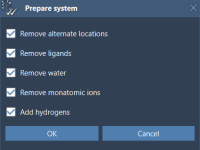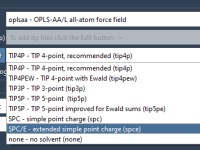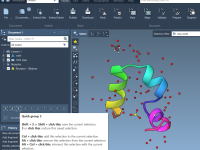
Simplifying Molecular Modeling: Running a Universal Force Field (UFF) Simulation in SAMSON
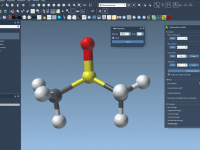
Mastering Node Group Attributes in SAMSON’s NSL
Molecular modeling involves managing and organizing vast amounts of data, structures, and nodes. One of the challenges modelers face is efficiently specifying and filtering relevant node groups during simulations and analyses. Fortunately, SAMSON’s Node Specification Language (NSL) offers powerful tools…
Mastering Molecular Visualization: The Power of Color Schemes in SAMSON
Fine-tuning the Search Domain in Molecular Docking with AutoDock Vina Extended
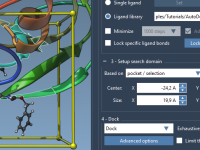
One common challenge in molecular docking is efficiently identifying docking sites without compromising on accuracy. The search domain, the region where docking calculations are performed, plays a major role here. Using unnecessarily large domains increases computation time, while overly restricted…