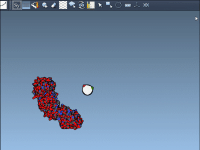
When a molecular scene contains many structural groups, finding the backbone you need can become a surprisingly fiddly task. A name alone may not be enough: you might also need to distinguish groups by atom count, elemental composition, charge, or…
A protein structure can look incomplete when you open it: one chain appears in the viewer, while the biological complex or crystal packing requires many copies arranged around it. The missing pieces may not be missing at all. A PDB…
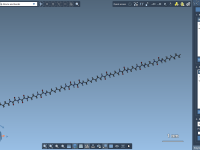
Building a polymer model often starts with a deceptively simple question: how do you turn a collection of molecular fragments into the exact chain you need? Manually copying units, choosing connection points, and keeping track of repeating patterns can become…
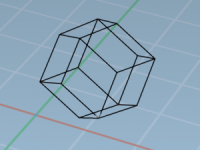
A simulation box can look like a simple setup choice—until it causes two common headaches: using more solvent than necessary, or allowing a molecule to interact with its own periodic image. The right unit-cell shape and enough space around the…
You have finished preparing a molecular model, and now you need to share it with a collaborator, move it into another tool, or preserve it in a file format your next step can use. This is where a small but…
A molecular simulation can produce a lot of motion—and a lot of saved data. But when the run is over, a common question remains: what should you examine next? Without a clear route from simulation to analysis, it is easy…
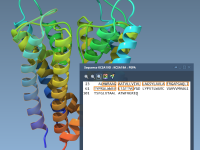
A common frustration in molecular modeling is losing the connection between a residue’s place in a sequence and its location in a three-dimensional structure. A sequence is easy to scan, while a structure is easier to inspect spatially—but switching between…
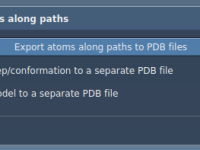
A molecular path can be easy to inspect and surprisingly awkward to reuse. You may see a ligand move through a protein, but for a reaction-coordinate analysis or another downstream workflow, you need the actual coordinates at each point—not just…
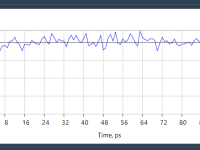
A temperature trace that moves up and down can make it hard to tell whether an NVT equilibration has worked. Should you stop, run longer, or move on? The useful signal is not a perfectly flat line: small fluctuations around…
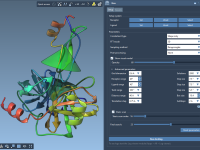
A protein–protein docking run can produce a long list of plausible-looking poses—and still leave you unsure where to start. Searching every possible orientation is expensive, while narrowing the search too aggressively can exclude a useful pose. The practical challenge is…