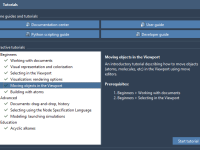
Learning a molecular modeling platform can involve a familiar frustration: you read a guide, switch to the application, and then have to remember which menu to open and what to do next. For a task you have not performed before,…
When a molecular scene contains several structures, identifying the one you need by name alone can be unreliable. Names may be generic, repeated, or unfamiliar, and opening structures one at a time takes attention away from the modeling task. In…
A distance or angle can look straightforward when a structure is still. The challenge comes when you move atoms, minimize a structure, or revisit the model later: a handwritten value or unsaved on-screen annotation can quickly become outdated or disappear.…
You have found the angle that makes a molecular structure easy to inspect. Then you zoom in to examine a detail, and the wider context disappears. Or you rotate the model to compare another side and struggle to get back…
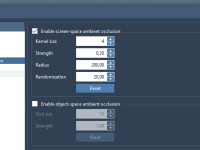
A molecular model can be scientifically correct and still be difficult to read. At some viewing angles, atoms and bonds seem to blend together; depth is hard to judge, and a selected region may disappear into the background. Before changing…
A new molecular modeling platform can leave you with a surprisingly practical question: What should I do first? You may be unsure whether your computer meets the requirements, where the application was installed, or whether you need to find extensions…
A molecular mechanism can look convincing in an animation and still fail when its motion is simulated. One common reason is that a moving part is driven too quickly for the system to complete the intended interaction. The result is…
A selection that looks right at first glance can quietly include more than you intended. In a molecular model, typing LYS into the Document view’s filter may select lysine residues, but it can also select their backbones and side chains…
Preparing a coarse-grained (CG) model for molecular dynamics can feel deceptively familiar: load the structure, add water, and prepare the simulation. But a setting that works for an atomistic system may place coarse-grained solvent beads too close to the model.…
When a molecular system moves through a trajectory, a fixed camera can quickly stop showing the part you care about. The atoms drift toward the edge of the view, and the viewer has to keep adjusting the camera to follow…