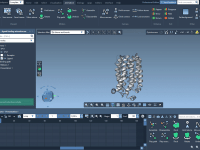
Finding a DNA origami structure is only the first step. The file may come from a paper, a repository, or a colleague—and it may not be in the format your modeling or simulation workflow expects. Before you can inspect or…
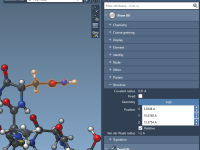
When a molecular model contains several selected atoms, changing their coordinates can feel risky: will the whole group move together, or will every atom be placed at the same position? In SAMSON, the Inspector’s Relative option is the key to…
Few things interrupt a molecular modeling session like installing software, opening a project, and discovering that the workstation cannot provide the graphics capabilities the application needs. The useful check is not just whether a computer is new enough or has…
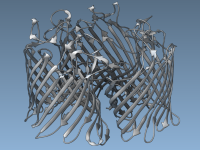
A molecular model can contain all the right structural information and still be hard to read. At a glance, nearby and distant regions may blend together, ribbon edges can look jagged, and overlapping parts may be difficult to distinguish. Before…
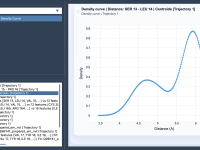
A long molecular trajectory can produce thousands of measurements: distances, RMSD values, energies, or radii of gyration. Looking at the raw values—or at a histogram with awkward bin choices—can make it hard to see where the system spends time or…
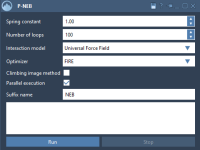
A molecular transition path can look reasonable at first glance and still contain awkward intermediate structures: atoms may take an indirect route, or neighboring frames may be unevenly spaced. The hard part is often not finding a sequence of structures,…
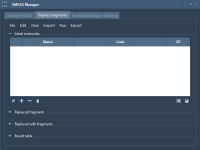
When exploring a molecular series, a small structural change can mean a lot of repetitive work: edit each SMILES string, check whether the edit is valid, keep names attached to the right compounds, and then prepare structures for inspection. A…
A molecular animation can show atoms moving, but a visual presentation is not the same thing as a saved trajectory. If you need to preserve the positions produced by an animation sequence, the challenge is to record the right motion…
A crystal structure can look perfectly ordered in a viewer, even when the experimental structure describes sites that are occupied only some of the time. That distinction matters when you want your model to reflect defects or substitutions rather than…
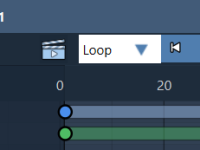
A molecular trajectory can be difficult to interpret when you only watch it move in one direction. A conformational change may happen quickly, a structural feature may be easier to notice on the way back, or you may simply want…