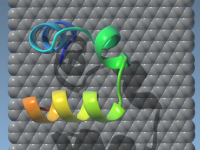
A Smarter Way to Select Atoms Using Mathematical Expressions

Atom selection isn’t always straightforward. If you’re a molecular modeler dealing with large, complex atomic structures, manually selecting atoms that meet specific spatial or chemical criteria can be slow and error-prone. Whether you’re extracting a region of interest or preparing…

Reducing False Positives in Protein Docking with Range Angles

One of the common challenges in protein-protein docking is dealing with an overwhelming number of incorrect binding predictions. These false positives can distract from promising candidates and add time-consuming work for researchers manually evaluating results. Fortunately, Hex for SAMSON offers…

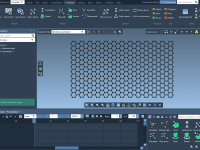
Editing Atoms on the Fly During a UFF Simulation in SAMSON

When running molecular simulations, a common challenge is the need to experiment interactively with the molecular system — adding or deleting atoms without resetting everything. Whether you’re exploring a reaction mechanism or preparing a structure for refinement, being able to…

What Are Node Types in SAMSON, and Why Do They Matter?

When working with molecular systems, modeling becomes significantly easier if your software knows what kind of data it’s dealing with. In SAMSON, this is achieved through a smart organization system called node types. If you’re new to SAMSON or just…

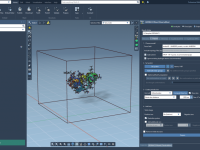
Protein Transition Pathways Depend on This Box

When working with proteins that undergo large conformational changes, a key challenge in simulating realistic transition paths is defining where and how atoms are allowed to move. In SAMSON’s Protein Path Finder, this is controlled by a critical setup step:…