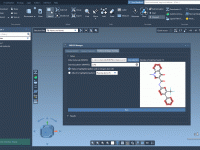
Streamlining Coarse-Grained Molecular Models with Martinize2 in SAMSON

For molecular modelers, working on large biomolecular systems can be challenging, especially when simulations become resource-intensive and time-consuming. One effective solution to this problem is transitioning atomistic structures into coarse-grained (CG) models, which simplify the representation of molecules and allow…

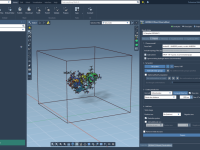
Enhance Molecular Visualizations with Progressive Clipping in SAMSON

Molecular modelers often encounter challenges when inspecting dense structures like proteins. Traditional clipping methods, while functional, fall short in providing a detailed and intuitive depth perception of complex molecular environments. Whether you’re visualizing intricate binding pockets or preparing presentation-ready structures,…

A Smooth Start: How to Install SAMSON and Get Started

Are you venturing into the world of computational nanoscience and eager to start using SAMSON, the integrative molecular design platform? Whether you’re a molecular modeler or a researcher in materials science, installing and launching SAMSON correctly is the first step…

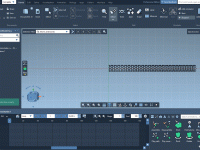
Using Path Attributes in SAMSON to Streamline Molecular Modeling

Molecular modeling often involves handling large datasets, with structures of varying complexity. Selecting or analyzing specific conformations can sometimes feel overwhelming without the right tools. Thankfully, SAMSON’s Path Attribute Space in the NSL simplifies this process with efficient attribute-based filtering…

Making Molecular Presentations with SAMSON Animator.

Creating captivating molecular presentations can be a complex task, but SAMSON makes it significantly easier with its Animator tool. Whether you’re looking to showcase molecular docking, structural assembly, or intricate camera paths, the SAMSON Animator provides all the tools you…

Enhance Molecular Modeling with Sequence-Based Coloring in SAMSON

In molecular modeling, visualizing structural characteristics effectively can be a significant challenge, especially when trying to analyze biophysical properties across complex biomolecules. Colorizing residues to reflect their properties can clarify structural insights, accelerate decision-making, and make presentations much more impactful.…