A measurement can answer a quick question—how far apart are two atoms?—but in molecular modeling, the useful question often comes next: what happens to that distance when the structure changes? A temporary readout is easy to lose, and a number…
A molecular scene can contain exactly the structures you need and still be difficult to read. When a component is no longer relevant, hiding it immediately may make the presentation feel abrupt; leaving it visible can distract from the detail…
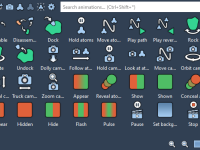
A molecular model can contain more information than a viewer can absorb at a glance. A complex structure may be scientifically meaningful, yet difficult to explain when everything appears at once and the camera stays still. Animation can help guide…
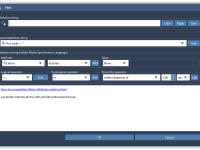
Large molecular structures can make a simple task surprisingly fiddly: finding just the atoms you need without accidentally including nearby atoms from another chain, residue, or chemical group. In SAMSON, the Node Specification Language (NSL) lets you build atom selections…
A molecular file that will not open can interrupt an otherwise straightforward modeling task. The first useful question is not necessarily “What went wrong?” but “Which part of the file-loading process am I trying to solve?” In SAMSON, three references…
It’s a familiar molecular-modeling frustration: you search for atoms near a residue, select a group, or try to exclude one type of node—and the result includes unexpected objects. A query may match a residue, its atoms, a containing group, or…
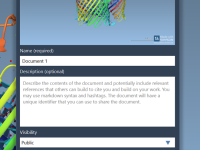
A molecular model is most useful to a collaborator when they can actually open and use it. But sharing a document also raises a practical question: should it be available to everyone, only to people with a link, or only…
In a molecular modeling scene, it is easy to lose time looking for the right camera node—especially when names are similar or you need to check which cameras are selected. SAMSON’s Node Specification Language (NSL) lets you describe camera nodes…
When preparing a molecular presentation, a common challenge is showing where a group of atoms or a mesh belongs without manually arranging a convincing starting position first. The Dock animation in SAMSON can help: it treats the selected structures’ current…
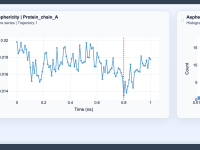
A molecular group can change its overall shape without changing much in size. That can make a trajectory harder to interpret: a single measure such as radius of gyration may look nearly steady, even while the group becomes more elongated…