A molecular animation can show atoms moving, but a visual presentation alone may not give you a reusable path to inspect or play back later. The practical challenge is capturing the positions produced by one or more animations—and knowing whether…
A molecular structure can be scientifically accurate and still be hard to read on screen. When atoms and bonds overlap, it may be difficult to tell which parts are closer, how regions are oriented, or where one structure ends and…
A molecular model can be accurate and still be difficult to explain. When a whole structure appears at once, viewers may struggle to follow which atoms matter or how different parts relate. A progressive reveal offers a simple visual solution:…
Two structures of the same protein can show different conformations, but knowing the starting and ending shapes does not reveal how the protein might move between them. For molecular modelers, bridging that gap is a practical challenge: a straight interpolation…
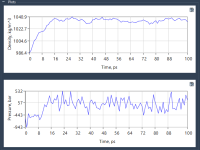
A common source of uncertainty in molecular dynamics is deciding when equilibration is finished. During NPT equilibration, pressure can fluctuate widely, so a noisy pressure trace does not automatically mean something has gone wrong—or that the system is ready for…
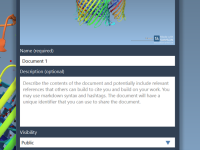
Sharing a molecular model should make collaboration easier—not leave colleagues wondering whether they can open it, or make you worry that it is available more widely than intended. Before sending a document, take a moment to choose who should be…
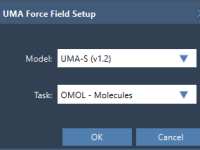
A molecular structure can look ready to simulate and still produce confusing results: the wrong application task, an incorrect molecular charge, or an unchecked periodic cell can undermine the interpretation. The first energy may also take longer than expected while…
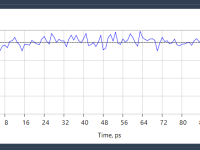
A molecular dynamics system can finish energy minimization and still be far from thermal equilibrium. Starting the next stage too soon may leave you unsure whether the temperature is settling—or whether the simulation simply needs more time. NVT equilibration provides…
A molecular structure can look complete on screen and still leave the important question unanswered: what happens as it changes? For modelers, the challenge is often not simply starting a simulation. It is knowing what to do next—how to create…
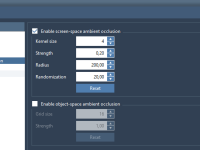
A molecular scene can contain all the right structural information and still be hard to read. Ribbons overlap, a protein seems to float in front of a surface, or the edges of a model look jagged. Often the problem is…