Making Molecular Models More Intuitive with the Rotate Animation

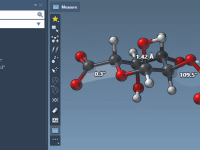
When modeling molecular structures, clearly communicating spatial arrangements and transformations is essential. Whether preparing a teaching animation, capturing how molecules interact, or simply visualizing molecular conformations, one common need is to rotate a group of atoms to better convey a…

Preview and Generate Protein Symmetry Mates in Real Time

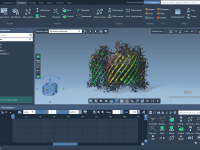
Exploring the arrangement of protein subunits is essential in structural biology, particularly when transitioning from crystallographic units to biologically relevant assemblies. A recurring challenge for molecular modelers is determining how individual protein chains relate to their symmetric counterparts, especially when…

Visualizing Spike Protein Motion: From Closed to Open State

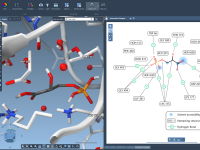
For molecular modelers studying viral pathogens, understanding conformational changes in key proteins is more than just a matter of curiosity—it’s essential for tasks like drug design, antibody targeting, and vaccine development. One significant structure that’s drawn global focus is the…

A Smarter Way to Explore Molecular Variants with SMILES

When designing new molecules, especially in early-stage drug discovery, chemists often need to generate analogs by modifying specific parts of a lead compound. This process, known as isosteric replacement or fragment replacement, can be extremely tedious and laborious. Doing this…